

Why Diverse Thought and Identities are Crucial to Agile Teams
A diverse set of thoughts, backgrounds, and perspectives is simply good business. One of the primary benefits of agility is the constant feedback loop it creates between team members, and without deliberately building an environment that welcomes diversity of thought and opinion, organizations miss a real opportunity to improve employee engagement and build better products and services for their customers.
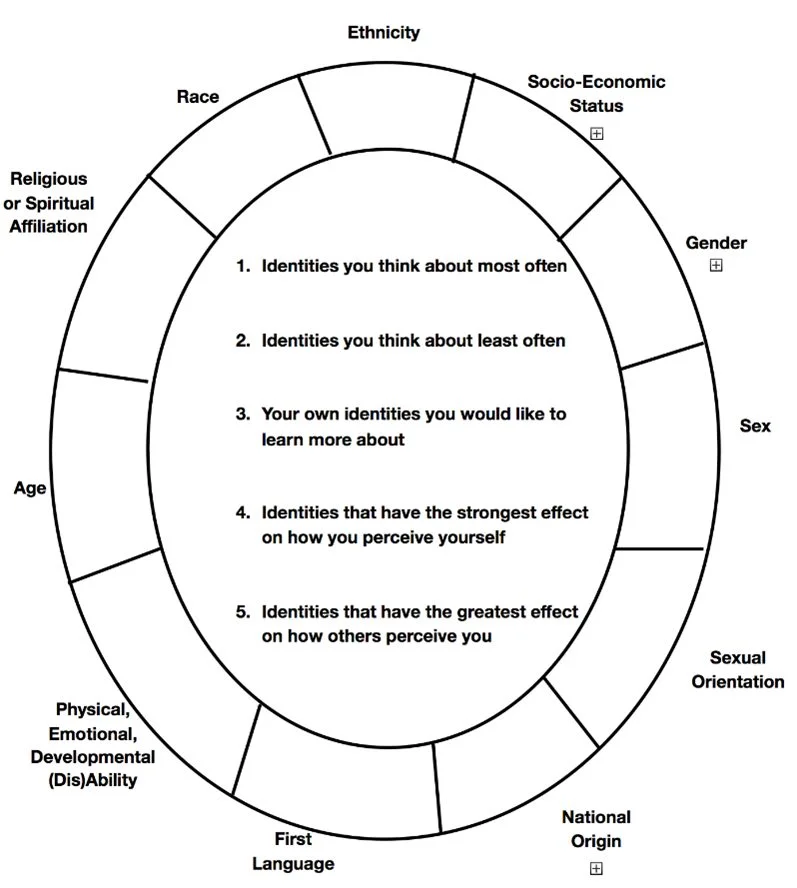
Every individual brings a different lived experience to their work, shaped not only by the choices they have made throughout their life but by the overlapping dimensions of identity they hold. Team members see the world through the lens of these identities, and when teammates hold different identities, they naturally see problems differently and contribute unique perspectives to every conversation.
Cognitive Diversity as a Team Capability
Agile values discussion and shared perspective by design. A team with a genuine variety of identities will generally produce richer discussion, surfacing varied assumptions that need to be unearthed and weighed before the team can make meaningful prioritization decisions. This same focus on dialogue and shared ownership is what makes Agile teams more inclusive by design, fostering a stronger culture of inclusion than a typical command-and-control structure allows.
Diverse teams operating within an inclusive culture bring a wealth of knowledge, experience, and insight, but realizing that value takes deliberate effort. Organizations need to actively shape an inclusive culture, and teams need to go deeper in their conversations to align on how each member is interpreting a given scenario or decision.
Corporate anthropologist Geert Hofstede identified defining cultural factors that shape multinational enterprises, for better and worse. The four original dimensions were:
Power distance, individualism versus collectivism, masculinity versus femininity, and uncertainty avoidance.
These dimensions shape both organizational cultures and individual national cultures. When team members come from different cultural backgrounds, it takes deliberate work to align on where each person is coming from and why they may experience the same piece of work differently. This is not a negative dynamic, provided the team takes time to understand these differences and suspends judgment about why a colleague may be making a particular choice, since that choice is very often rooted in their individual identity or culture.
Research from The Open University in the UK found that 29 percent of senior managers admit to hiring people just like themselves. An organization built this way lacks the breadth of life experience and thinking required to drive creativity and innovation, and it struggles to retain a diverse client base as a result.
The same risk applies when standing up Agile teams internally. Building a team of people who think alike creates a comfortable but limited dynamic, since constant agreement leaves little room to test ideas. Effective teams need some intentional push and pull between members to surface real variance in perspective. One person may build trust by receiving all the pertinent data up front, while another may feel overwhelmed by the same approach and lose trust immediately. The strongest innovations tend to come from people who challenge one another's thinking while staying focused on a shared set of goals, rather than on their differences.
Cognitive diversity, broadly defined, is the inclusion of people who bring different ways of thinking, different viewpoints, and different skill sets to a team or business group. Actively fostering this kind of diversity is a reliable strategy for success. Agile enables organizations to compete by maximizing the creative potential of teams through the distribution of authority and empowerment: those closest to the work are trusted and expected to determine how best to meet their goals, an approach that draws on the collective intelligence and creativity of the whole team rather than a single point of direction.
The more diverse a team is across ability, age, and identity, the more diverse its collective thinking becomes. Diversity of thought consistently produces a wider range of creative solutions to challenging business problems, while a homogeneous group with nearly identical backgrounds tends to see a narrower slice of any given challenge. Age is a useful example: older team members often see problems differently than younger colleagues, and that difference in perspective is a source of insight rather than a reason to discount their input.
Cross-Functional Teams: Diversity in Skill, Diversity in Identity
Much of the value of Agile transformation comes from a shift in team structure, with cross-functional, dedicated teams established to execute work end to end. These teams need a mix of skill sets so they can define, build, test, and implement work without heavy dependence on other functions and without the delays that dependency creates.
This cross-functional structure produces a more innovative, less siloed understanding of customer needs across the value chain. Just as cross-functional teams bring different skills together, diverse team members bring different perspectives, and it is that variety of perspective that directly shapes the breadth of problems a team identifies and the solutions it creates. Diverse backgrounds and identities matter just as much as diverse skill sets across every phase of the work, and research consistently shows that intentionally diverse teams spur innovation faster than their more homogeneous counterparts.
Agile Teams as a Mirror of the Customer
One underappreciated advantage of diverse Agile teams is their ability to mirror the customer base they serve. A team that reflects the diversity of its customers in age, family composition, socioeconomic background, and other dimensions of identity is far better positioned to create solutions that connect on a deeper level than the product or service alone. These teams can shape an experience, and a brand, that speaks to customers in a personal and memorable way.
As customers continue to expect greater personalization, diverse Agile teams can respond with both industry expertise and personal insight. The result is straightforward: teams feel more connected to their customers and their work, and customers experience solutions that feel genuinely tailored to them.
Psychological Safety Is Non-Negotiable
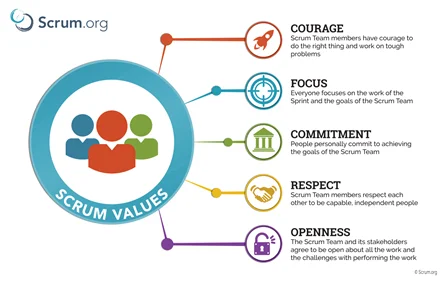
Collaboration across diverse teams is not always straightforward. Differing opinions are common, and consensus can take longer to reach. Teams work through this by holding firmly to the Scrum values of courage, focus, commitment, respect, and openness, communicating in ways that acknowledge and respond to different viewpoints while sharing their own within a psychologically safe environment. This combination is what allows teams to realize the full benefit of their diversity.
Building this kind of environment requires ongoing education on the range of identities present in any team, spanning ability, age, gender, sexual orientation, and learning differences, paired with a genuine team commitment to empathy. Training alone or commitment alone tends to fall short; without both, the benefits of a diverse team are diminished and unresolved conflict is more likely to surface. Consider a team that includes one gay team member and another who is openly and vocally negative about gay people: no amount of technical skill or process discipline allows that team to perform at its best while one member does not feel safe being themselves at work.
This question of personal disclosure and psychological safety has only grown more relevant as remote and hybrid work have become permanent fixtures of how teams operate. As more of people's personal circumstances become visible to colleagues through remote work, organizations carry a heightened responsibility to ensure that no one feels uncomfortable or exposed as a result. Sustained, safe consultation between staff and organizations about home working arrangements, and how that information is used, remains an important part of protecting psychological safety on distributed teams.
Where AI Fits Into the Picture
As organizations mature their Agile practices, AI tools are beginning to play a useful supporting role in building and sustaining diverse, high-performing teams, without replacing the human judgment at the center of this work. Sentiment analysis applied to retrospectives and team surveys can help surface early signs that a team member does not feel psychologically safe, well before the issue shows up in delivery metrics. Facilitation tools can prompt more balanced participation in ceremonies, gently flagging when certain voices are dominating discussion so facilitators can create space for others. And AI-assisted onboarding materials can help new team members from different backgrounds get oriented to a team's working norms faster, reducing the friction that often accompanies the early weeks of joining a genuinely diverse team.
None of this replaces the deliberate cultural work described above. AI can help organizations notice patterns and act on them sooner, but building an inclusive, cognitively diverse team still depends on leaders and team members choosing, consistently, to make space for perspectives different from their own.
Related Stories


Our Locations
We partner with clients from offices across the globe. Find the Adaptovate team nearest you.
Get in touch